|
| |
RIUNG, FLORES - SAILING INDONESIA |
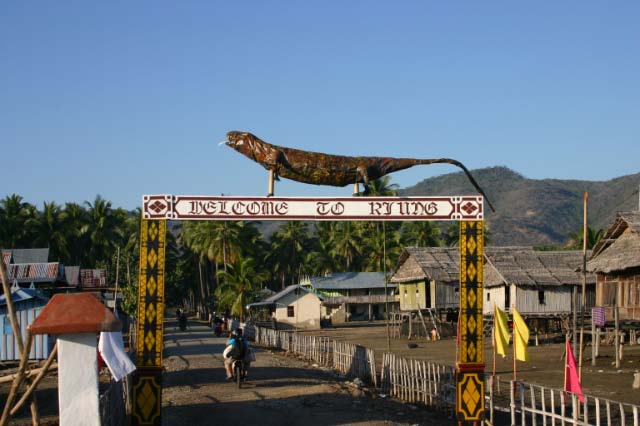
August 20 Riung, Flores
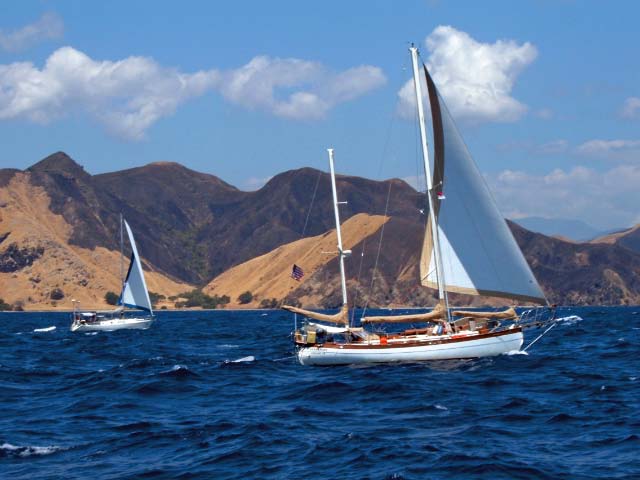
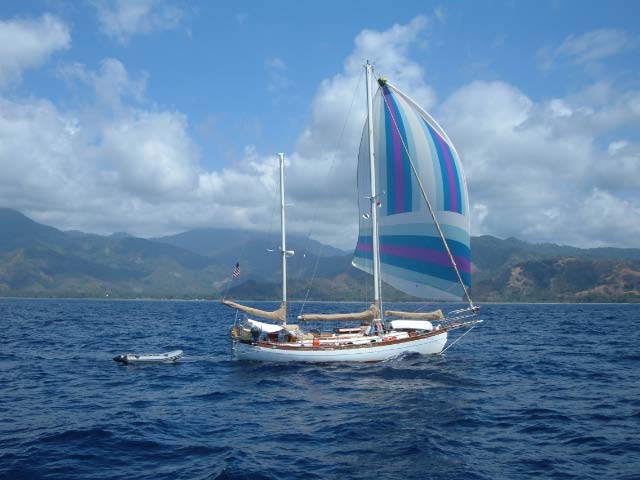
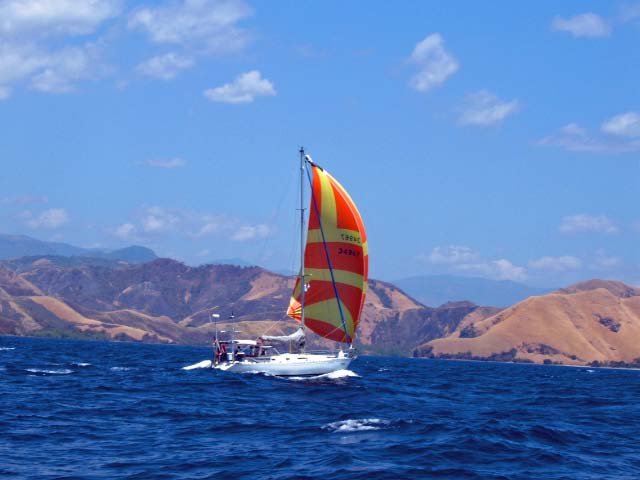
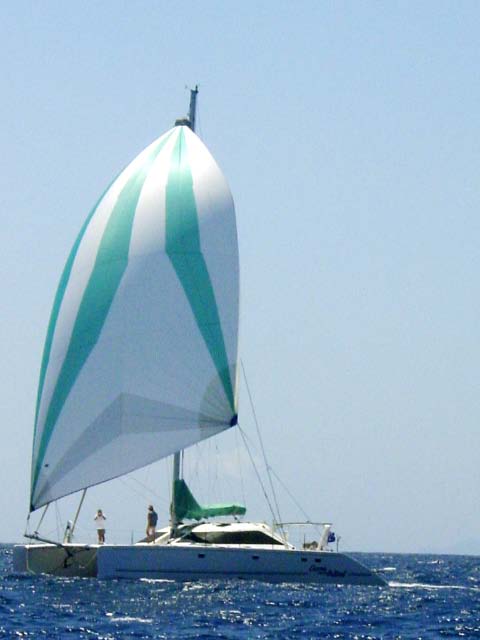
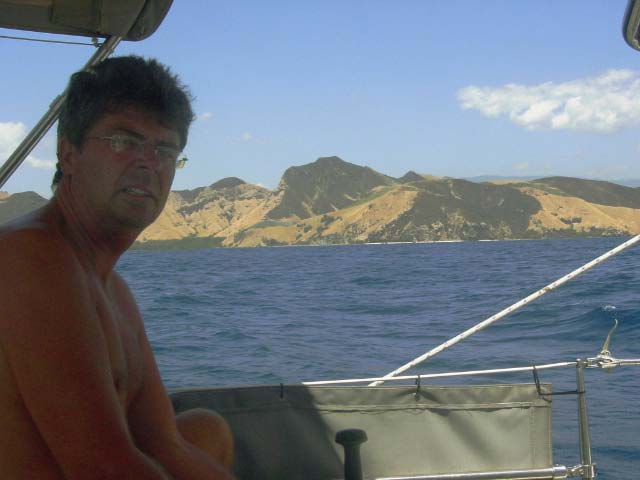
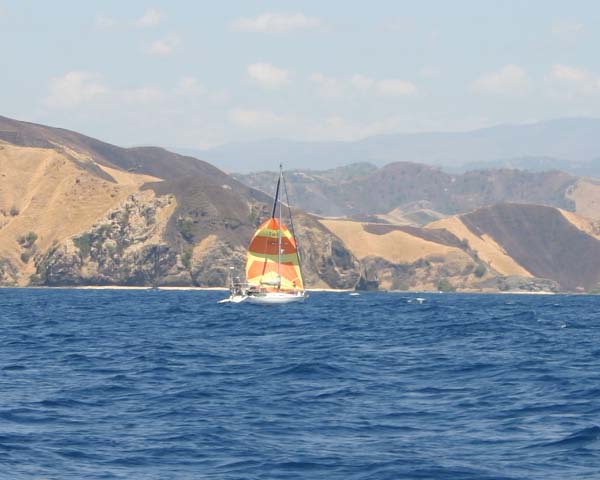
Our sail to Riung was idyllic through one of the biggest, most rugged
and beautiful islands, dominated by a string of volcanoes.
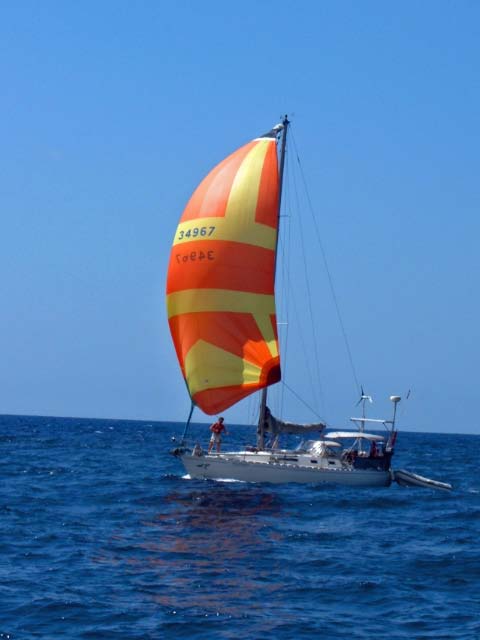
GWTW, Stardust and Ascension sailed abreast under
the sunny blue skies. Later,
we all flew our spinnakers as the conditions were perfect. |  |  |  |  |
|
 |
|
|
 |
 |
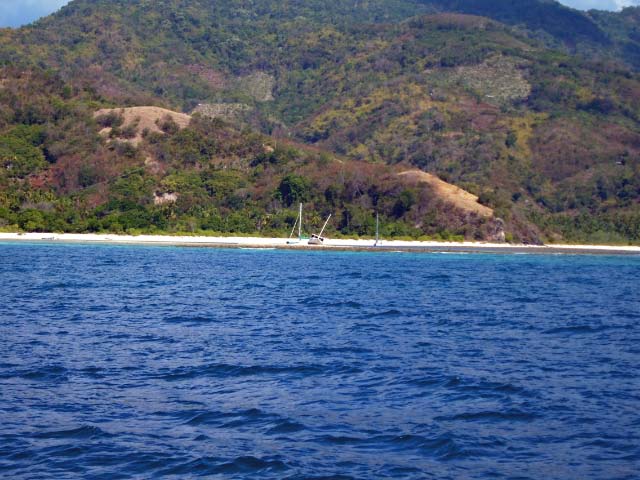
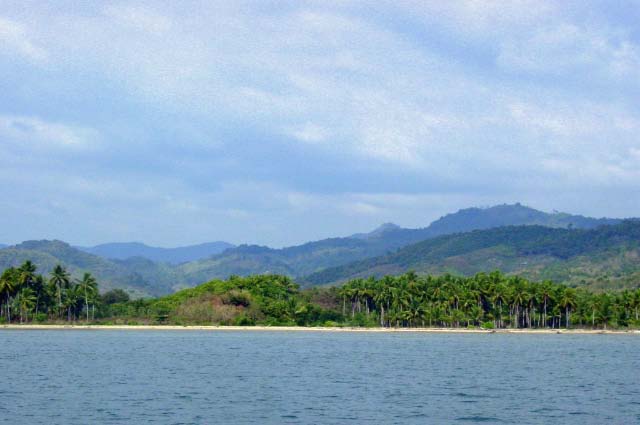
The landscape changed considerably as the rugged
mountainous terrain emerged from the sea and more
greenery was evident. |
We arrived in Teluk Riung just as 90% of the
boats were pulling anchor and leaving. Closing
ceremonies were that evening but we were too tired to
get to shore. |
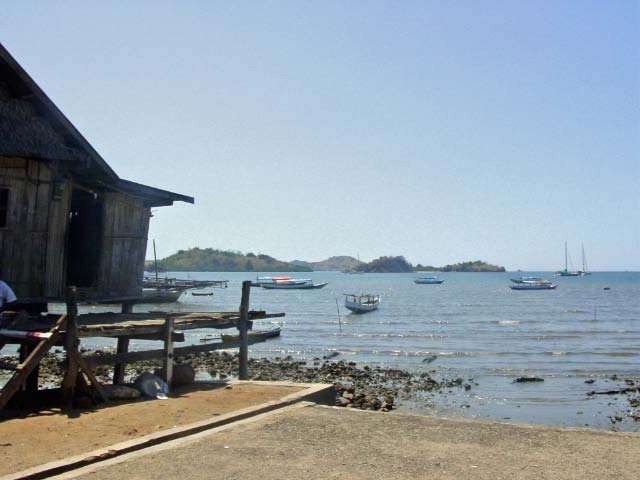
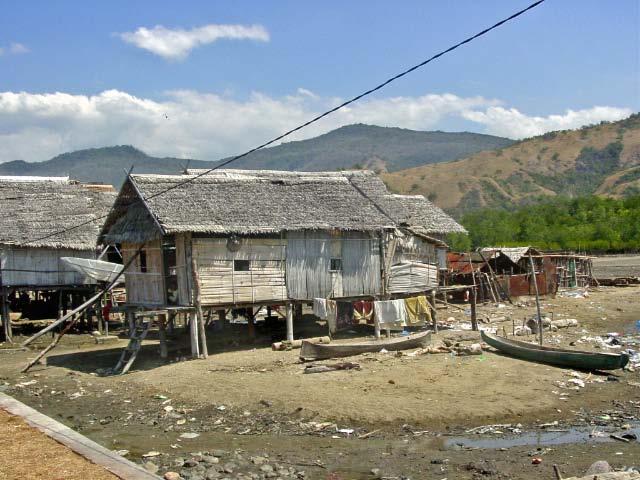
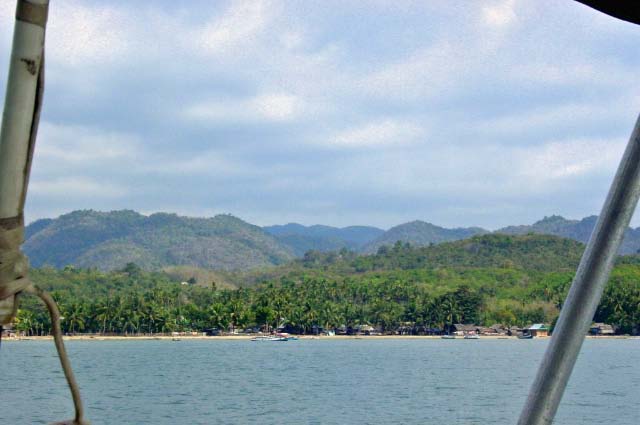
That there were lots of people and lots of trash
everywhere (especially in the water) were things that we
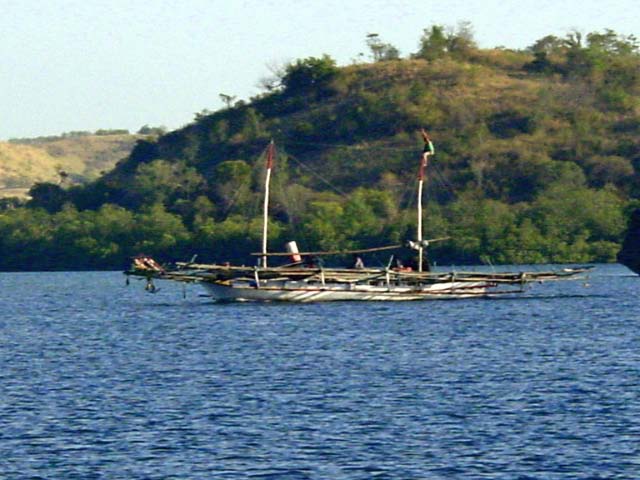
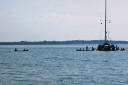
had expected, but the wide variety of sailing craft we
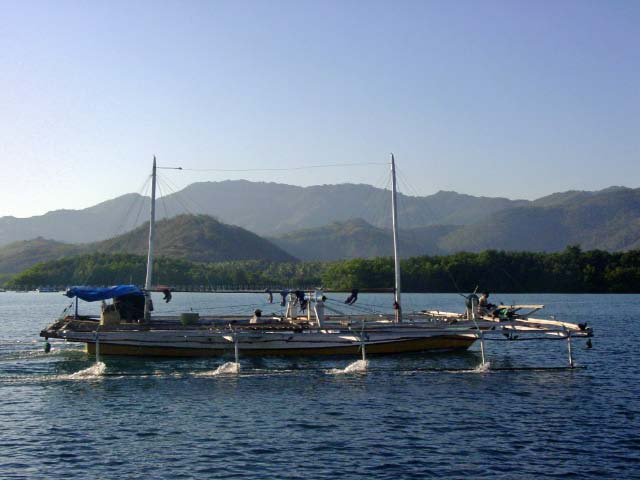
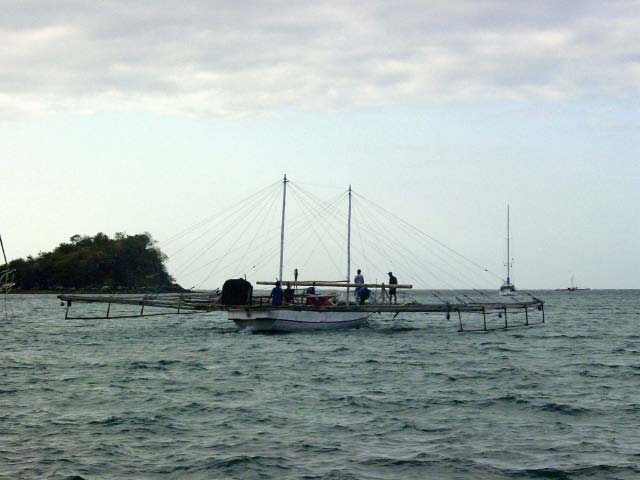
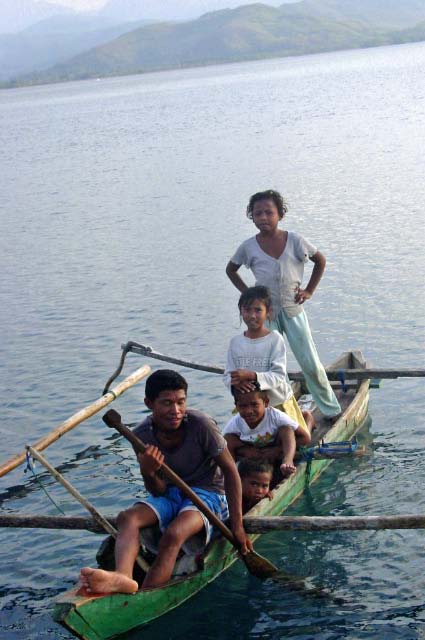
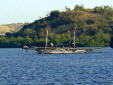
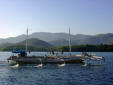
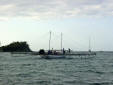
did not. Strange boats with huge outrigger arms set off
each evening for a night of fishing and returned each
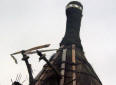
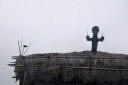
morn. Note the fellow up on the mast pictured left. |
It seems like everyone in Indonesia sails. The fishermen all go
about in dugout canoes with outriggers and lateen sails made from
blue tarps or holy rice bags, the cloth of choice for large cruising
boats. Even the local cargo boats have at least one large
gaff-rigged sail in addition to a big noisy single-cylinder diesel.
|
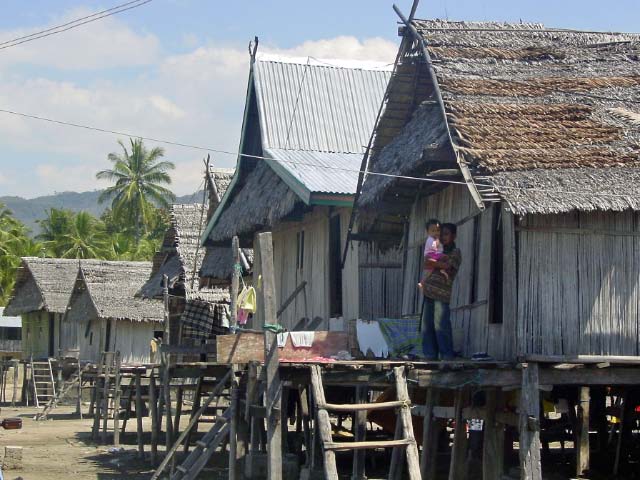
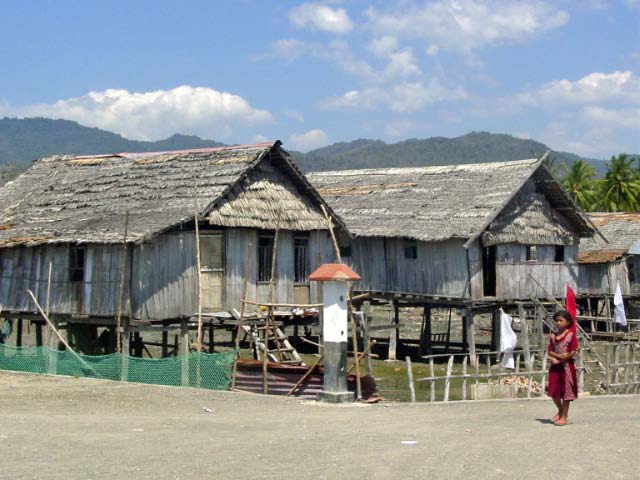
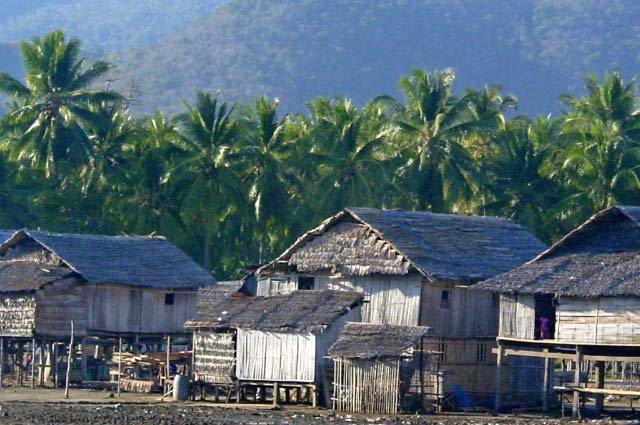
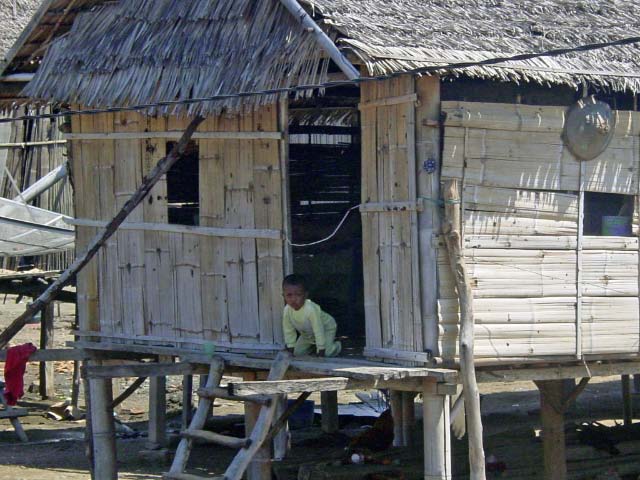
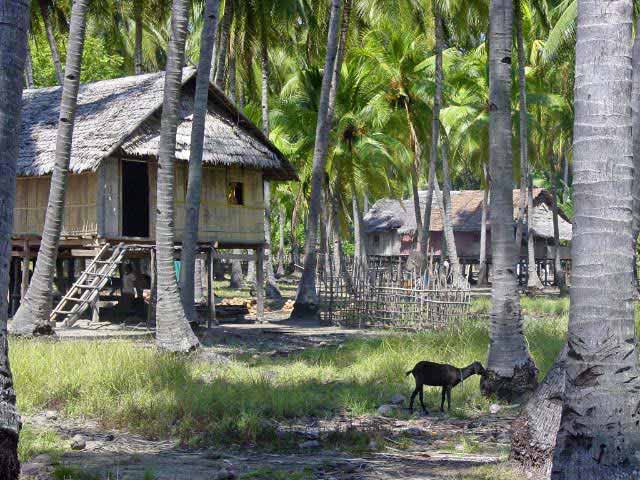
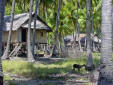
Behind the shacks we saw monkeys on the beach, intermingling with the
goats and chickens. 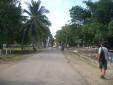 We
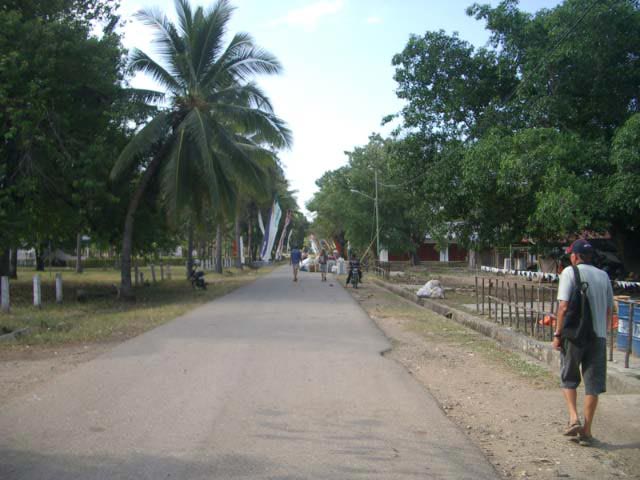
walked down the road and within 20 minutes were at the market, which is
set up only once a week. The display of vegetables was pretty dismal,
gnarly carrots, pea size tomatoes, very green papaya, wilted brown
spotted beans and not much variety (at least of food items I could
recognize!). We
walked down the road and within 20 minutes were at the market, which is
set up only once a week. The display of vegetables was pretty dismal,
gnarly carrots, pea size tomatoes, very green papaya, wilted brown
spotted beans and not much variety (at least of food items I could
recognize!).
|  |  |
Rice or Noodles
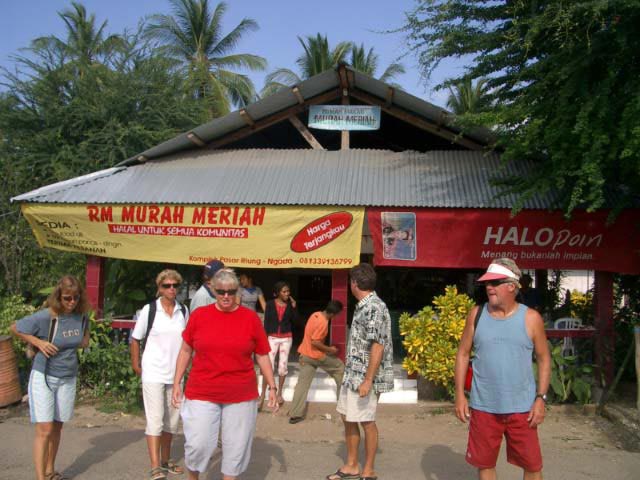
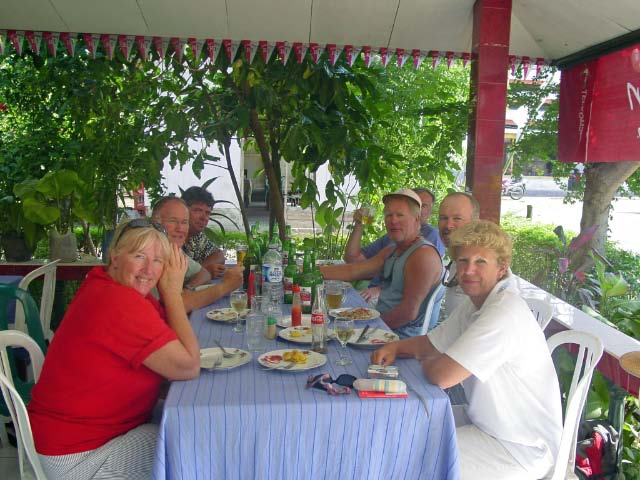
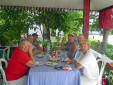
We made our way to an open air restaurant that offered the requisite
choice of rice or noodles. I opted for noodles and it was very tasty
at 1500 rupiah.
We walked back to the boat as the villagers waved to us from their
shacks. After we stopped at a little store to buy some eggs, we made
arrangements for a tour to a traditional village the following morn. | 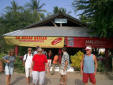
|  |
August 22
We awoke to find our small flotilla, Stardust, Belvenie,
Tactical, GWTW and ourselves the only boats left in the
anchorage. We met ashore for a 7 am departure to visit the
traditional village of Bena some 100 kms away. |
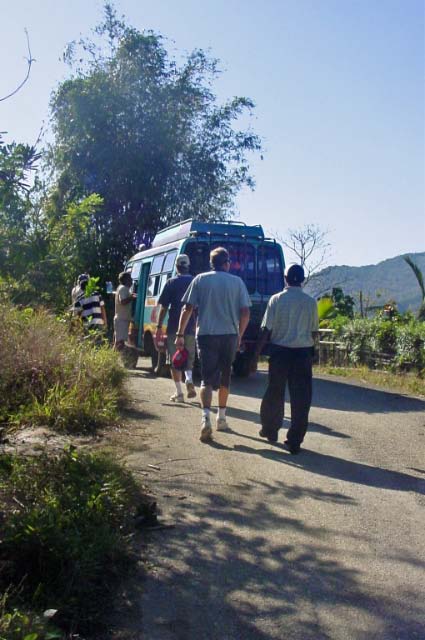
After some delay we boarded a bus and squished 2 per seat onto a
space that could only hold 1 ½ (the people here are so tiny!). I
sat behind the driver who coughed and horked out the window the
entire trip. The bus was hot and very filthy.
We headed into the hills, immediately transiting into a very steep
climb. The road was narrow, twisty and full of switchbacks, sealed
in some places but mostly crumbled away and everywhere in the
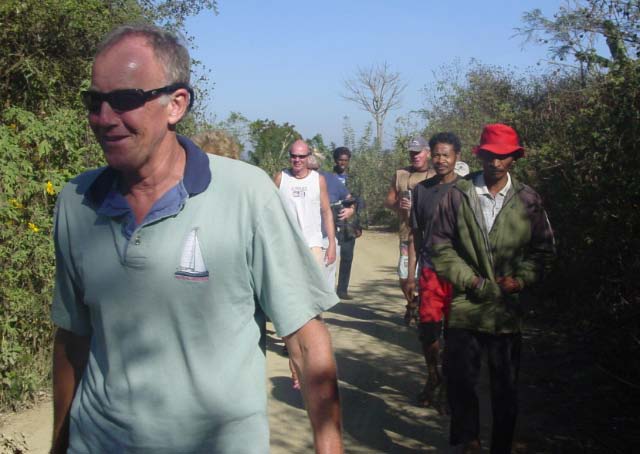
process of repair. The potholes were so deep that we had to get
our and walk at one point. The 100 kms to the village took 5 ½
hours each way!! |  |  |
Back on the bus, everyone was asleep in no time but the bliss
wasn’t long lasting on the bumpy road.
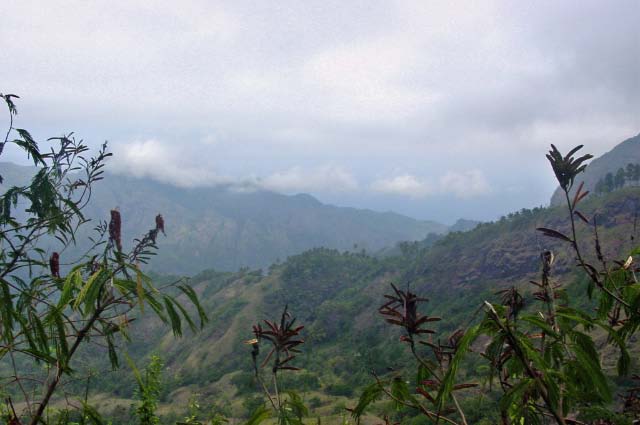
The mountainous journey offered beautiful scenery, lush and
tropical with lots of huge bamboo standings alongside the road.
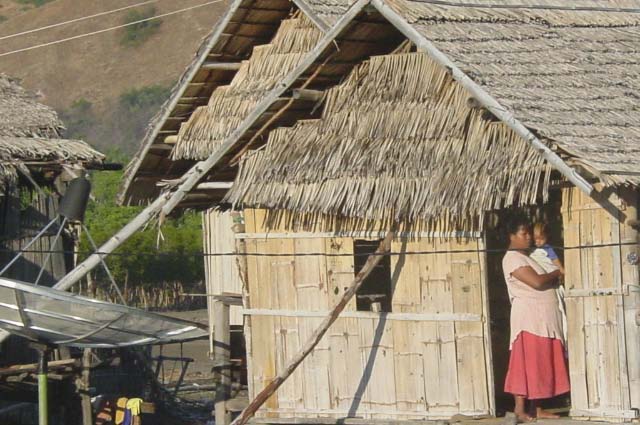
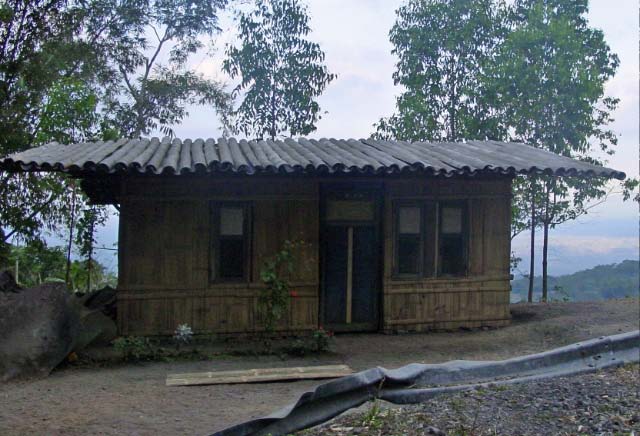
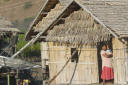
We passed a house (right) made completely of bamboo, walls and
roof. Everywhere people worked in their gardens or in the rice
fields, the women walking along the road laden with produce on
their heads. | 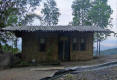 |
 |
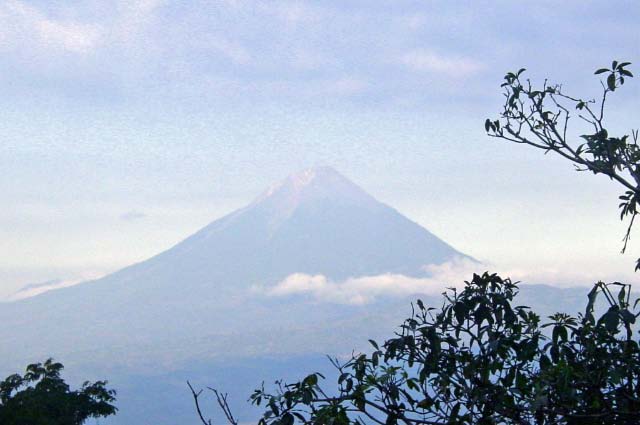
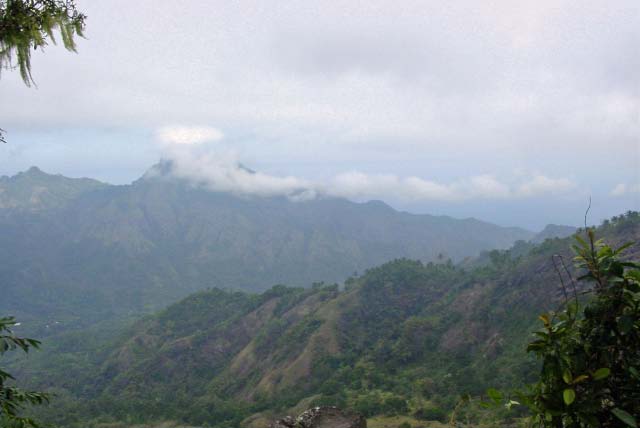
The view of the active volcano was spectacular with its smoke
billowing from the summit and black lava staining the face. |
Bena
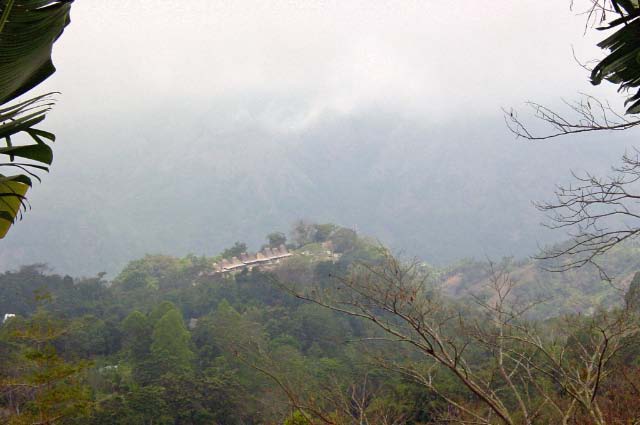
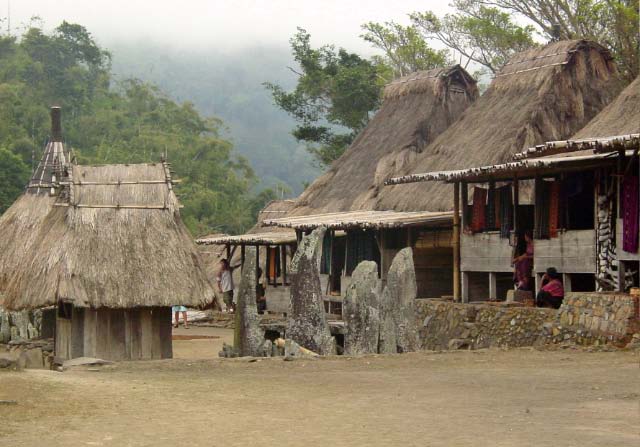
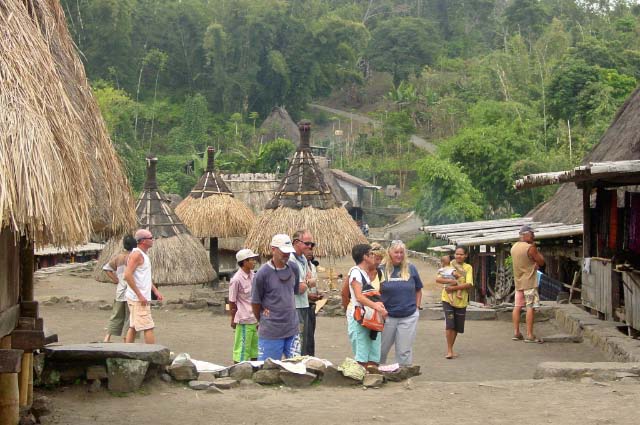
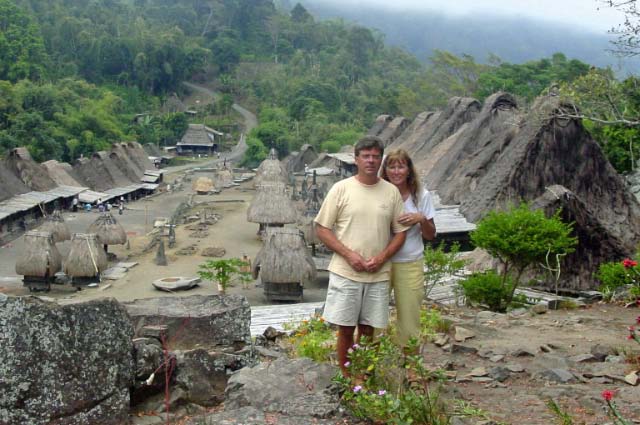
Eventually under the volcano, we could see Bena in the
distance. The tiny village appeared to be barely clinging to the
side of the wooded hill through the mist. | 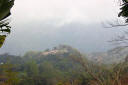 |
 |  |  |
Views from Around the Village
|
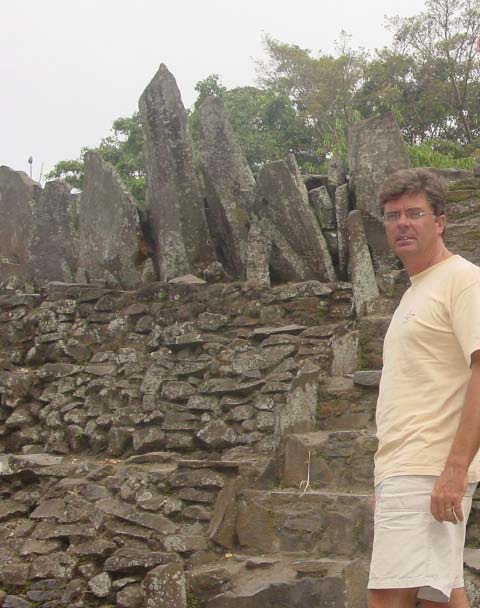
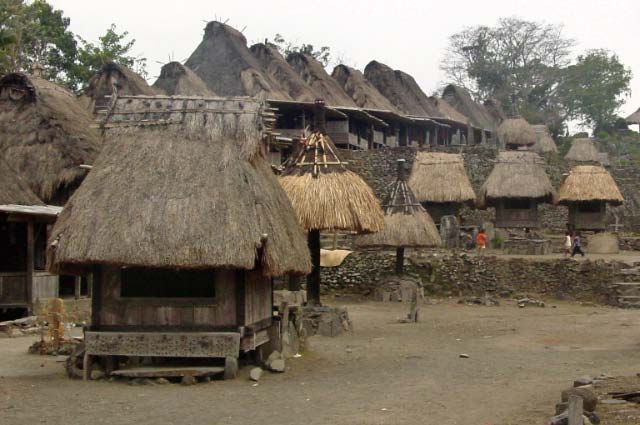
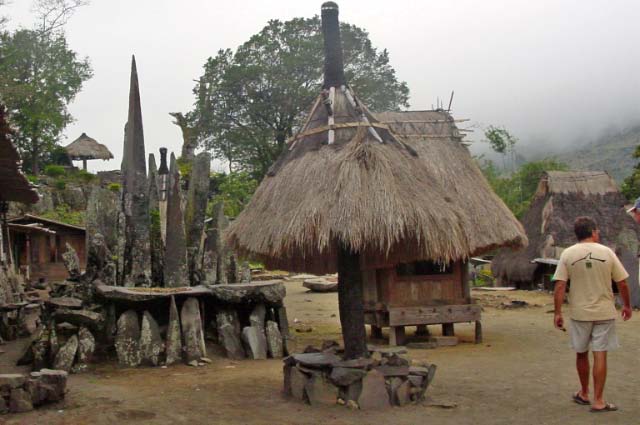
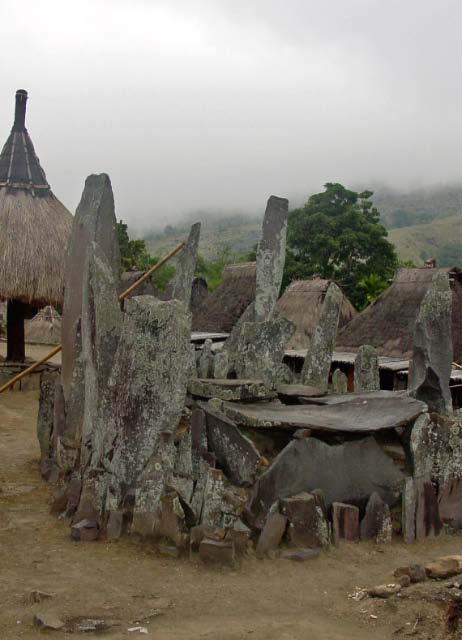
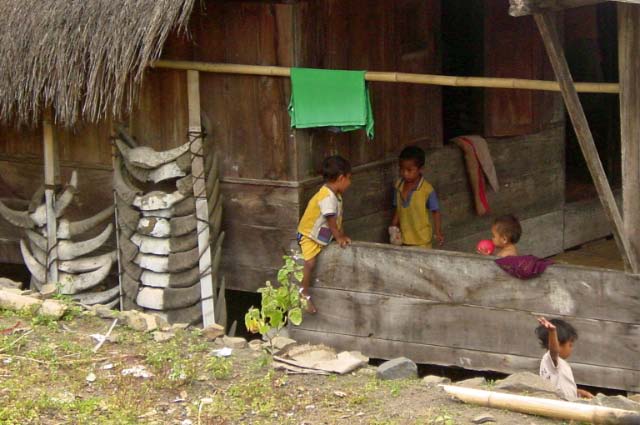
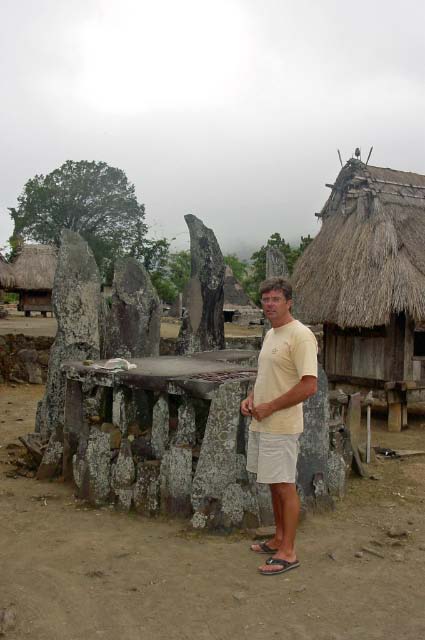
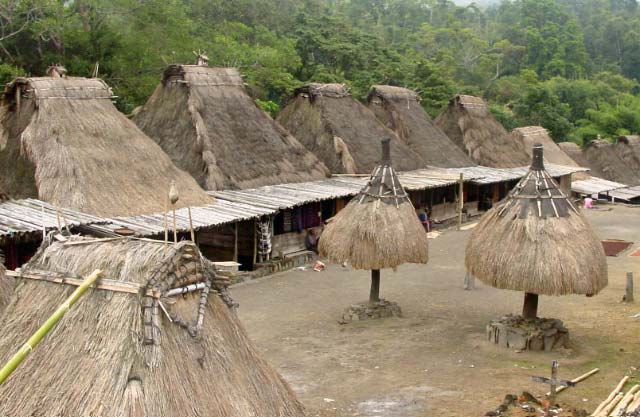
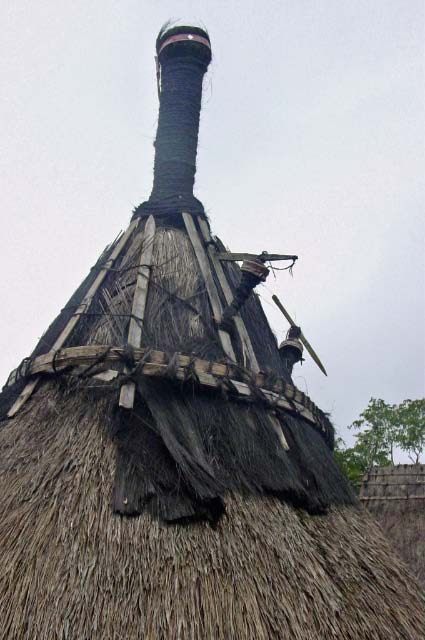
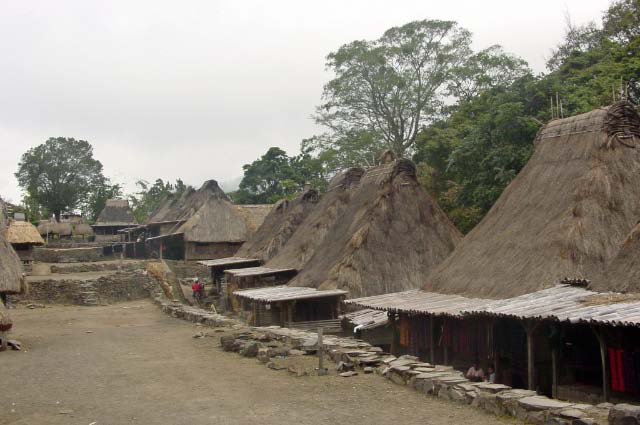
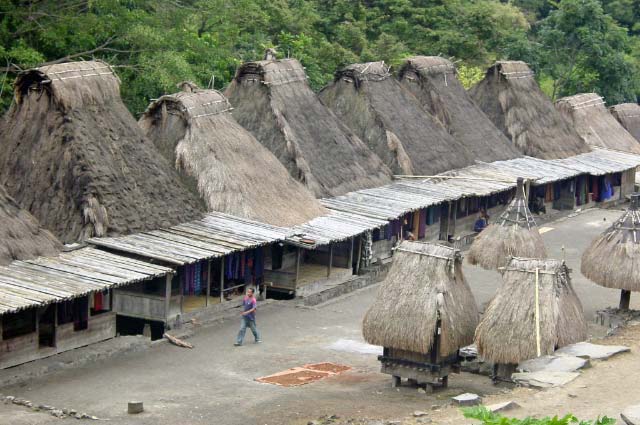
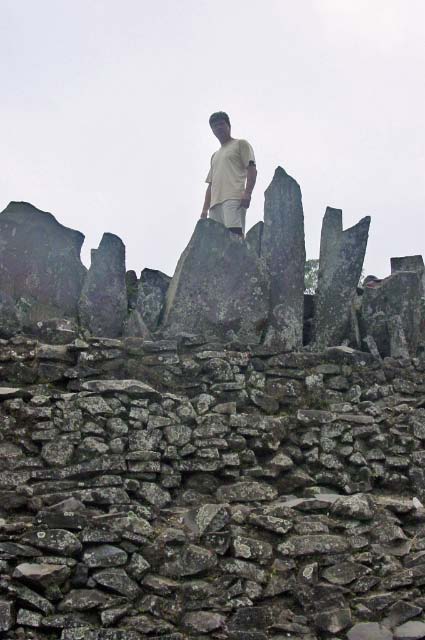
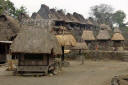
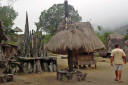
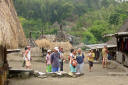
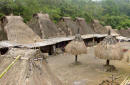
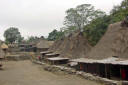
The first thing we noticed was all the stone monuments. High
thatched houses line the ridge in two rows, the space between them
filled with megalithic stones and monuments. These are the graves of
the village heroes, warriors that died in battle. | 
| 
|  |
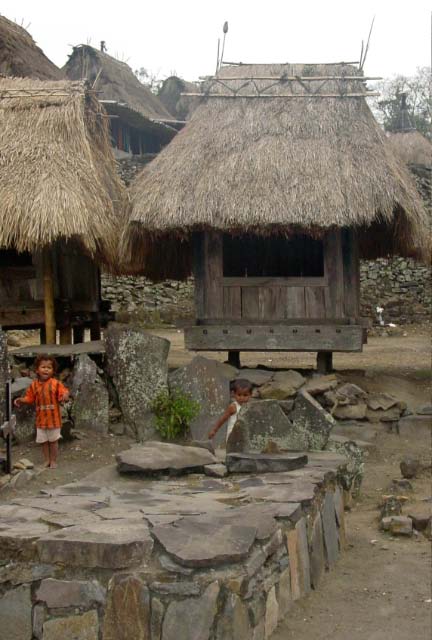
The little miniature house-like structures appear in two shapes, the
triangular ones representing men, the squarish ones representing the
females. |
 |  | 
| |  |  | 
| |
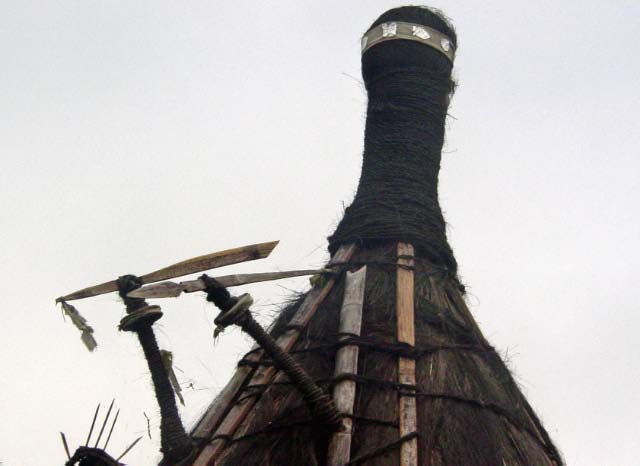
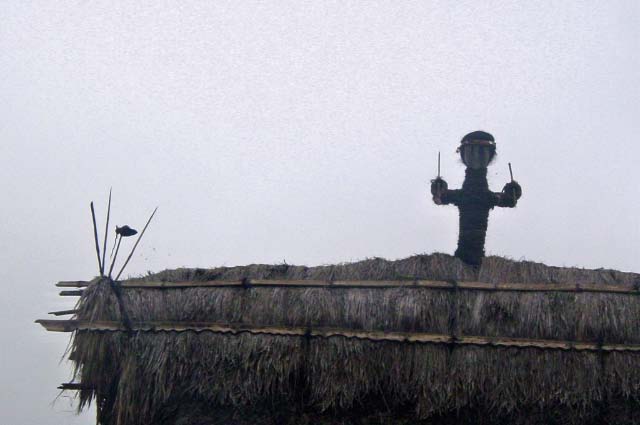
Some of the houses had little model houses on top of the roof
and small warrior statues representing the male and female
clan houses. |
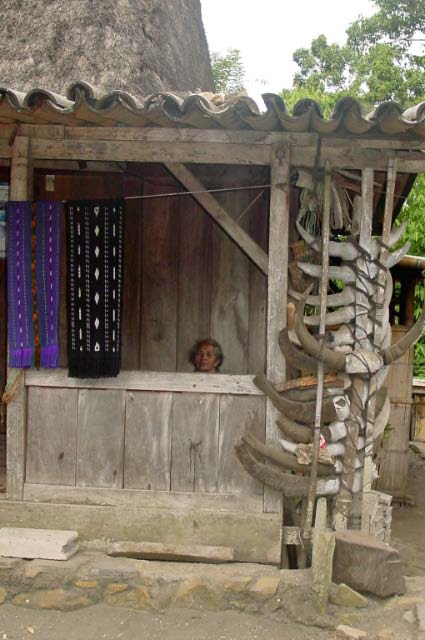
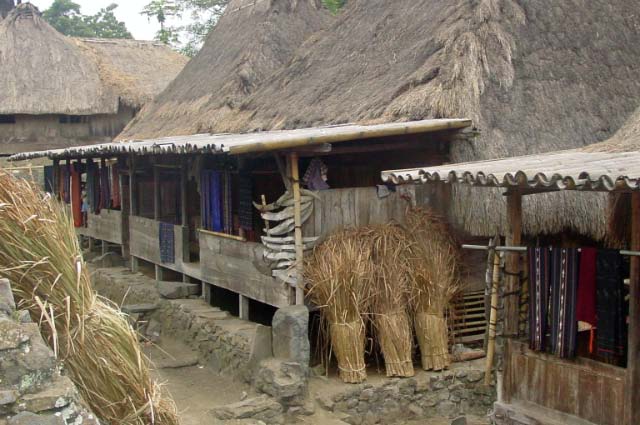
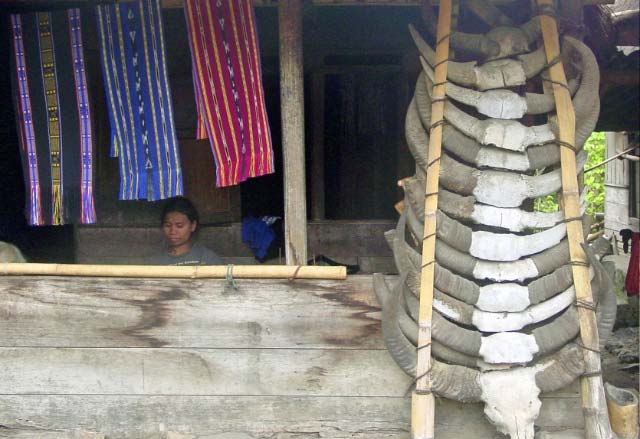
Buffalo horns adorned nearly all the buildings which we neat and
tidy. |
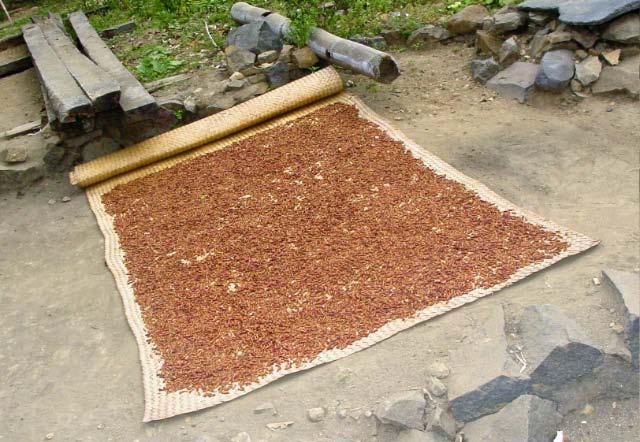
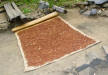
Here cocoa beans dry in the sun. |
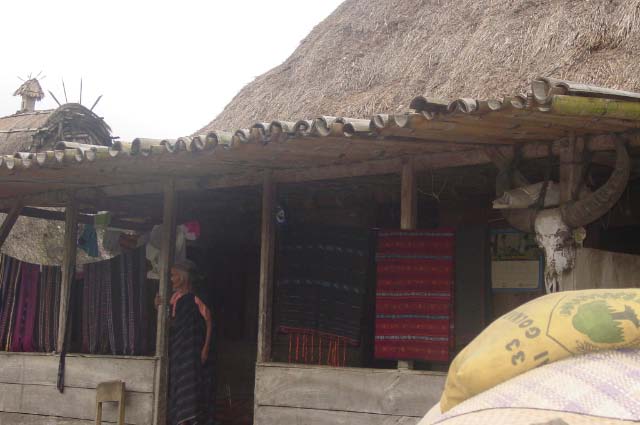
More Ikats
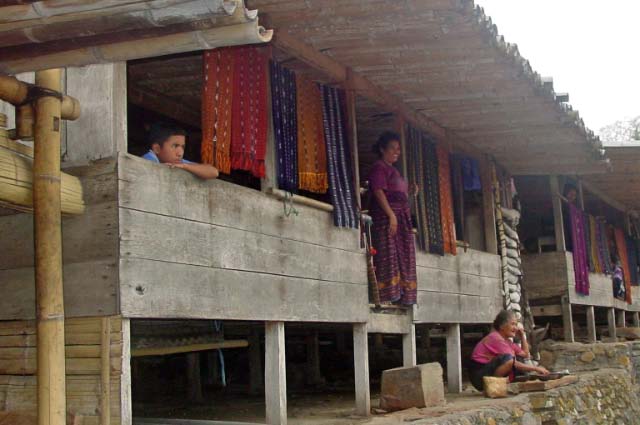
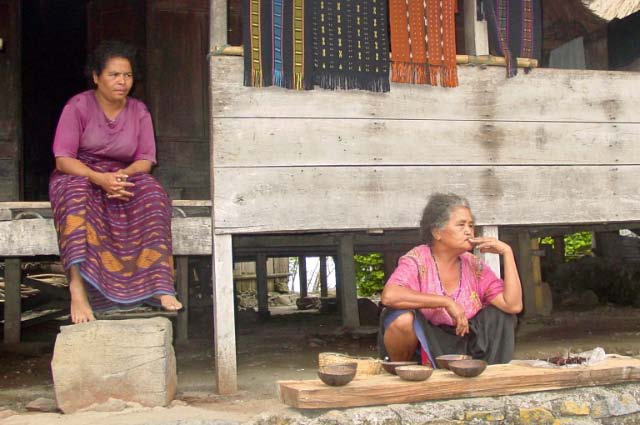
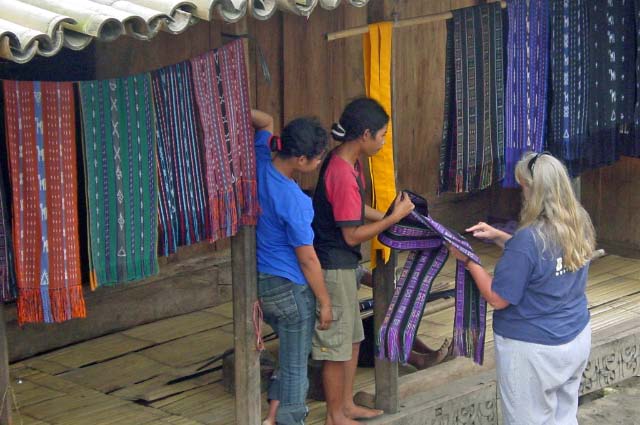
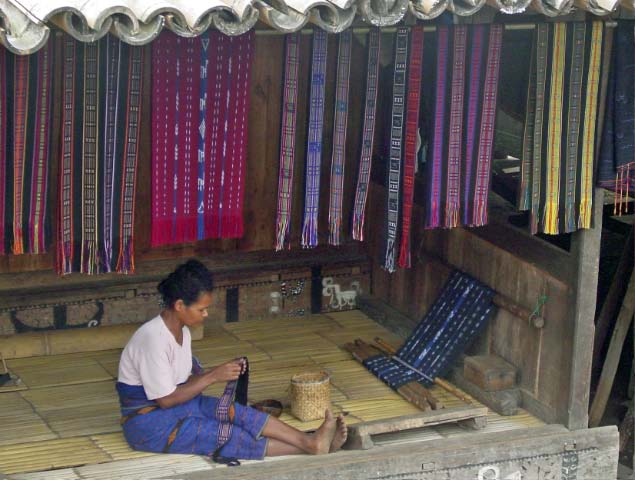
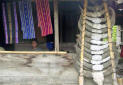
The usual offering of ikats sparked Becky's interest once again | 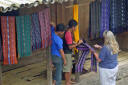 | 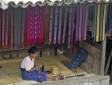 |
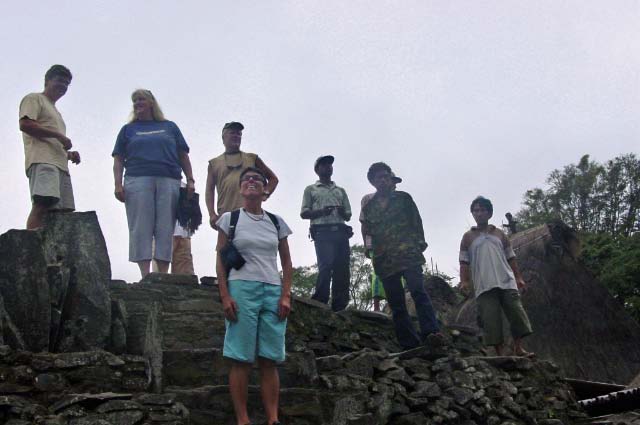
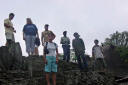
We climbed up to the shrine which overlooked the town and the
surrounding valley and volcano backdrop. | 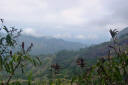 | 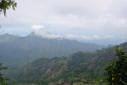 |
|
As we stood in the shrine above the village we could not help but
ponder that the village looked much like a movie set and the huge
array of ikats for sale hanging in front of each house did convey a
very touristy sense. | 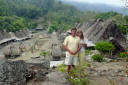 | 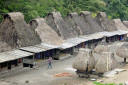 |  |
 |  |
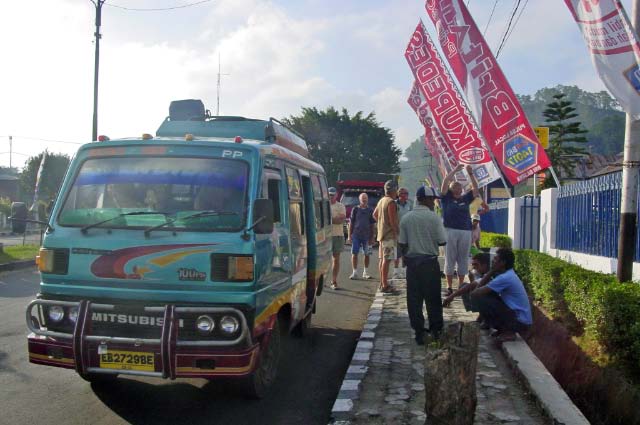
We left the village of Bena and climbed back on the bus and
the grueling ride back to Ruing. We stopped briefly in the city of
Bajava to stretch our legs and visit the ATM. | 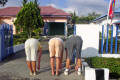 | 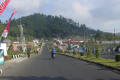 | 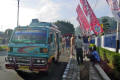 |
The full day’s travel on the bus left us setengah mati (half
dead) a common phrase used by Indonesian bus travelers. We arrived
back after 8 pm, tired and dusty.
|
 |
August 24
Bari,
Flores
Arrived at anchorage near village of
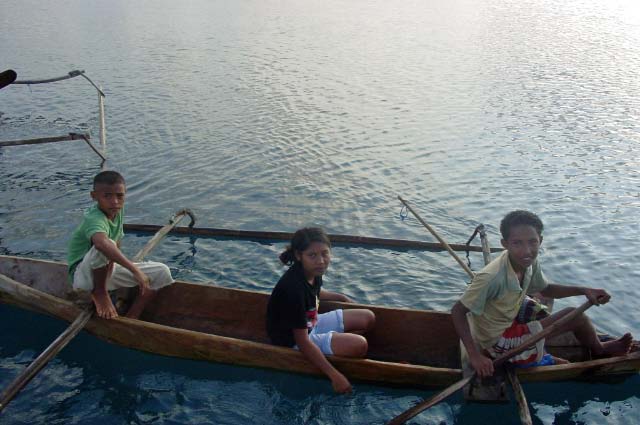
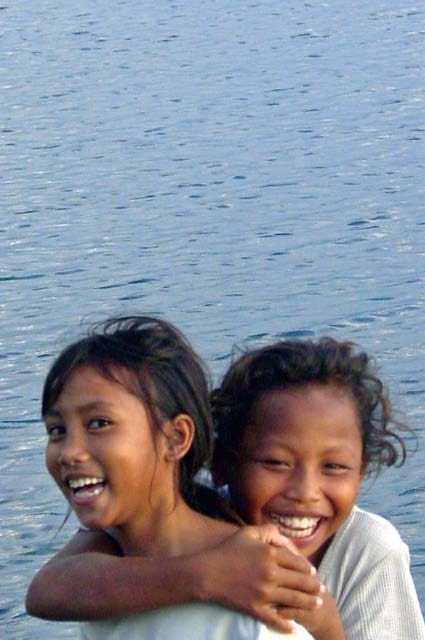
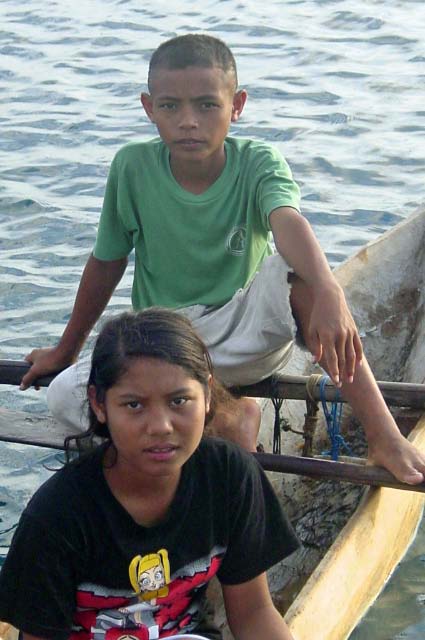
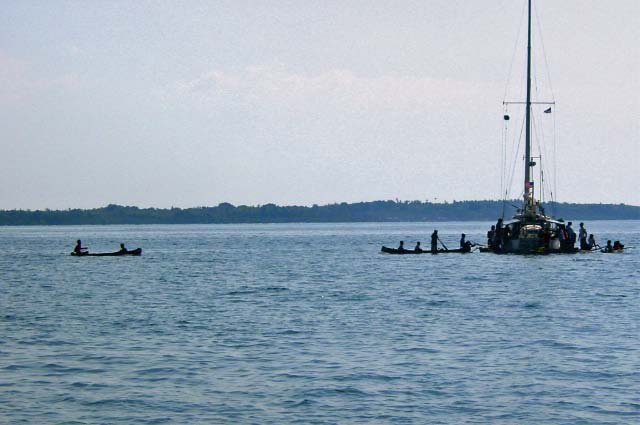
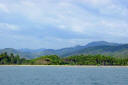
Bari. It was a stunningly beautiful anchorage but we were immediately barraged with dozens of canoes filled with children. As Bari is a Muslim village, only boys visited us, all trying to climb onboard, looking through the portholes and asking a million questions in their limited English. After depleting my supply of pencils, pens and candy we retreated to the cabin but they continued to call to us (hello mister) and wrap on the hull.
|
 |
|
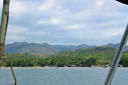 |
They were asking for all kinds of items not at all understanding any sense of privacy and would not be dissuaded. It got to be way too much as all the boat drew their curtains and closed their companionway hatches in an attempt at regaining a little peace and quiet.
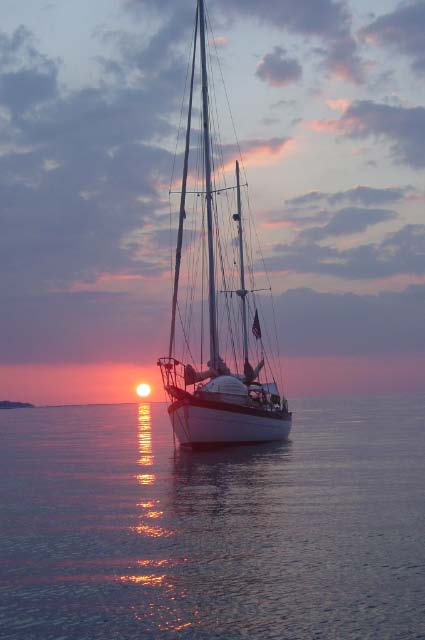
Finally the setting sun signaled a retreat back to the village. Pictured right is
Stardust. |
 |
|
August 24-26
Labuhanbajo, Flores
After we wove our way through fishing nets and sailed for an hour, the wind died and we had to motor once again.
We arrived at
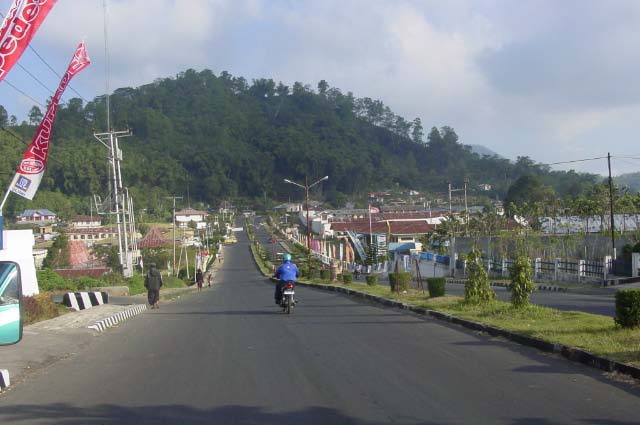
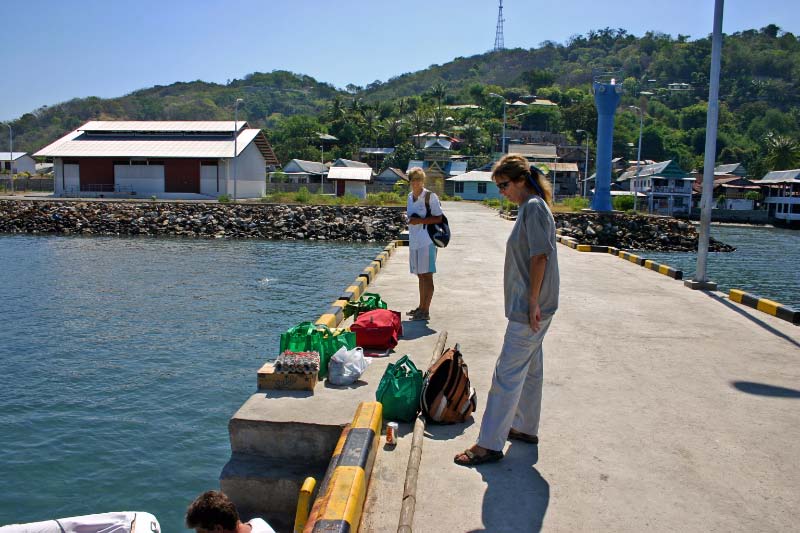
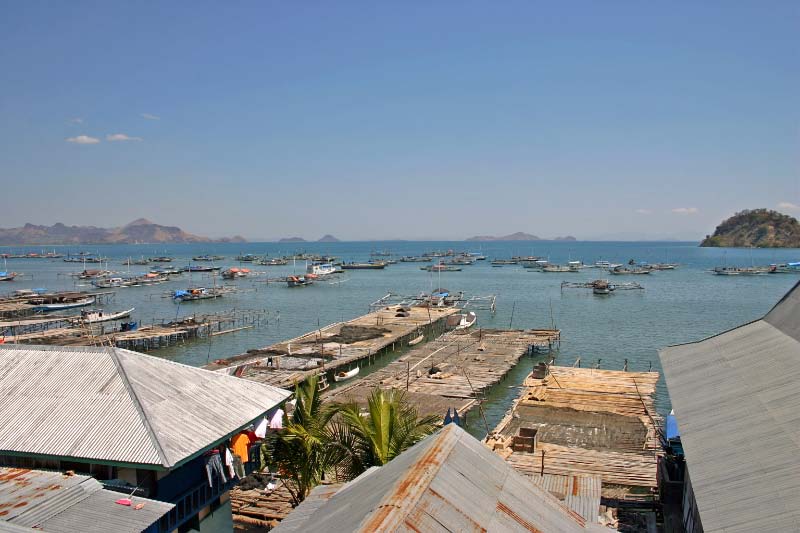
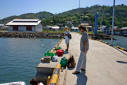
Labuhanbajo on the western end of the island of Flores and anchored amongst the fishing boats in front of the town. Access to town was easy via concrete dock with steps. The one street town, without footpaths, was nondescript, another typical Indonesian town with cramped shops, dirty streets and lots of bemo and bike traffic.
|
|
Our first order of business was to find a bank, no ATMs in town. Annie and I waited in line with our little numbers for over 2 hours (past bank closing time) to obtain money from our MasterCard.
We found internet but there was only one really slow computer and it kept losing the connection. There was a pretty fair market just out of town and we stocked up on veggies. |
|
 |
|